EDGEFIELD, S.C. — Michigan’s woods are beginning to stir this spring — and so is the science behind wild turkey management. This year, wildlife science in the state is getting a major boost. For the first time in Michigan history, researchers are launching a long-term, large-scale study of wild turkey populations.
The project, backed by $150,000 from the Michigan State Chapter of the National Wild Turkey Federation, represents a historic investment in understanding and conserving one of the state’s most iconic game species. Hunters, conservationists and wildlife enthusiasts alike are excited for the conservation implications.
“This is the first study of its kind here in Michigan and is critical in order to better understand factors that are impacting the population,” said Ryan Boyer, NWTF Midwest director of conservation operations.
From Surveys to Science
Until now, Michigan’s Department of Natural Resources has relied on data from harvest surveys, annual brood surveys and public observations to monitor wild turkey populations. The hunter harvest data has largely been used as an index of abundance, and was the only data available until 2023, when the brood survey was implemented. Each summer, residents are invited to report sightings of turkeys and their broods as part of the statewide wild turkey brood survey. These surveys provide a broad snapshot of turkey reproductive success and population trends across Michigan.
While these surveys have been valuable, they do not capture detailed biological measurements needed to fully understand turkey population dynamics. That is where this new research comes in, offering a level of scientific precision new to Michigan.
“The research project will provide an improved understanding of the wild turkey population in Michigan to accurately monitor trends in abundance, evaluate harvest regulations, guide habitat management and address conflicts with turkeys in urban areas,” said Ben Luukkonen, avian and wetland ecology research specialist at the Michigan Department of Natural Resources. “There has not been a large-scale study to estimate turkey survival or reproductive rates since turkeys were restored to Michigan, which limits our understanding of the factors influencing the turkey population. This study will provide estimates of survival, nest success, brood survival and harvest rates.”
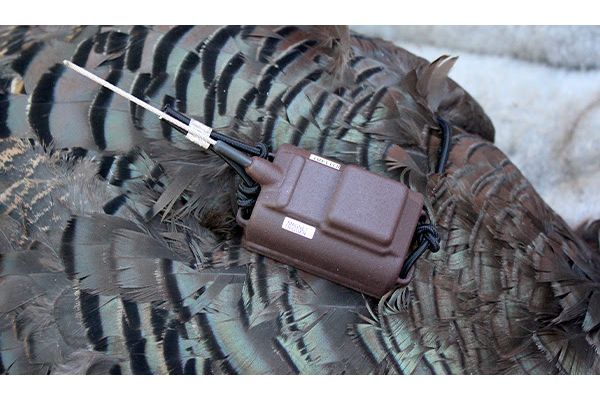
The study will last at least four years and involve trapping and banding male and female wild turkeys. GPS transmitters will be deployed on at least 120 female turkeys, allowing researchers to quantify movements and habitat selection. The data collected will help the Michigan DNR model populations and guide future management decisions.
The Researcher
Michigan State University’s Department of Fisheries and Wildlife is looking for a Ph.D. research assistant who will lead the effort. The researcher will oversee a team of technicians, manage field data collection and coordinate with partners at the Michigan DNR and USDA Wildlife Services.
The research assistant will collect and process GPS data, monitor survival and harvest rates, and estimate the success of nests and broods. All of this data will feed into a robust demographic model for wild turkeys in southern Michigan.
Learn more about this position.
Fieldwork will take place year-round, requiring careful balancing of classes, field responsibilities and data management.
“From the turkey management side of things, the research will provide us with a way to track the turkey population over time and allow us to monitor the potential impacts of new regulations, disease and other factors,” said Adam Bump, upland game bird specialist at the Michigan DNR. “Being able to monitor broad trends in the population over large portions of the state will help us maximize recreational opportunities while ensuring the population remains healthy.”
Answering Critical Questions
Jon Gray, president of the Michigan NWTF State Chapter, emphasized the significance of the project for hunters and conservation.
“Having the research and data to back up management decisions will increase the credibility of the DNR with hunters,” he said. “I think being able to show that research results are driving management recommendations will go a long way. Hopefully, hunters will see that this research is supported by the NWTF State Chapter and it will also shine a positive light on the organization and our efforts to conserve the wild turkey. The NWTF will also have research to cite if called upon for regulation recommendations. Having the research will allow us to show that the recommendations are based on science.”
A Major Investment in Conservation
The NWTF Michigan State Chapter has committed $150,000 over five years from its Super Fund, a funding model through which NWTF volunteers raise money at banquets and other fundraisers and allocate a significant portion of those proceeds into impactful conservation, research and outreach projects at the state level and beyond. These dollars will cover trapping equipment, GPS transmitters and other costs associated with the research.
Gray added, “NWTF members, and all turkey hunters in the state, should be excited by this research and that the NWTF and the Michigan DNR are working in lockstep to address the most significant research needs for our beloved game bird.”
This is more than a study. It is a bold step toward scientifically guided management that ensures the long-term health of Michigan’s wild turkeys.
Looking Ahead
This research will answer long-standing questions about turkey survival, reproduction and harvest impacts. It will allow wildlife managers to make decisions based on the results of this study rather than relying solely on survey data, ensuring that hunting seasons and quotas continue to support healthy wild turkey populations in Michigan.
The excitement is building among hunters, wildlife enthusiasts and conservationists. This historic investment and first-of-its-kind research in Michigan promise a future where wild turkeys continue to thrive for generations to come.
Gray concluded, “Hopefully, this research project will give our wild game managers the information needed to set seasons and quotas that will ensure the long-term health of the wild turkey population in Michigan and, in turn, assure that we will always have turkeys to hunt for future generations in the state. That is why the Michigan State Chapter has made a long-term commitment to fund this research, for the benefit of our NWTF members and turkey hunting in the state.”
About the National Wild Turkey Federation
Since 1973, the National Wild Turkey Federation has invested over half a billion dollars into wildlife conservation and has positively impacted over 25 million acres of critical wildlife habitat. Since 2022, the NWTF has also invested over $2.3 million in critical wild turkey research that, when leveraged with partner contributions, has resulted in more than $22 million to guide the management of the wild turkey and to ensure sustainable populations. The organization continues to deliver its mission by working across boundaries on a landscape scale to deliver healthy forests and wildlife habitats, clean and abundant water, resilient communities and robust recreational opportunities. With the help of its dedicated members, partners and staff, the NWTF continues to unite a nation through the life-changing power of the outdoors.