
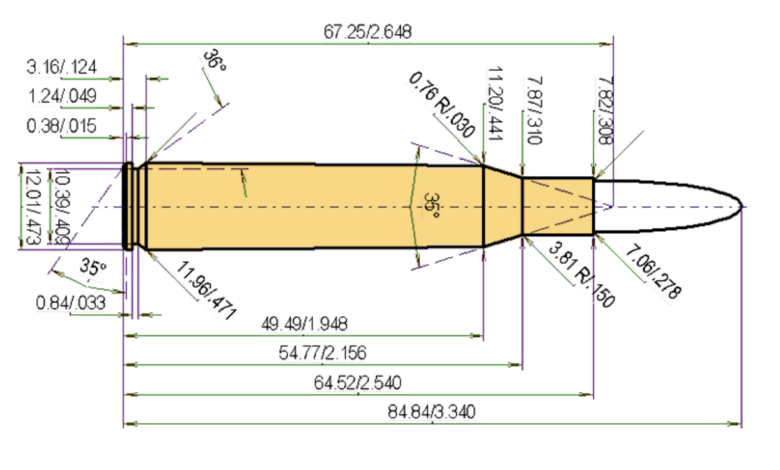
Best starting point for load development
Hunters are increasingly turning to reloading their own ammunition to reduce costs and achieve better accuracy from their hunting rifles. For many newcomers, one of the first questions is where to find reliable load data for developing safe and effective loads.
Traditionally, reloaders relied on the websites of bullet or powder manufacturers, printed reloading manuals, or ballistic simulation tools such as QuickLOAD or the Gordon Reloading Tool (GRT). Each of these resources has its strengths but also certain limitations.
Ballistic simulators are extremely powerful tools for analyzing and fine-tuning loads, but they require the user to already know which caliber, bullet, and powder combination they want to work with. In other words, they are excellent for optimizing a load once the basic components have already been chosen.
Manufacturer websites, on the other hand, provide predefined load tables that make it easy to see which combinations of bullets and powders work for a given caliber. However, these tables typically include only the manufacturer’s own products, limiting the range of available powders and bullets.
For this reason, many reloaders are now turning to a new generation of reloading platforms, such as ApexLOAD PRO, which combine the advantages of both approaches. These platforms offer extensive load tables covering a wide range of components while also integrating advanced ballistic calculators that allow users to refine and optimize loads for their specific rifle and requirements—both seamlessly integrated.
For example, if you are looking for .270 Win. load data but are unsure which bullet or powder might be a good option, you can start with load tables or use ApexLOAD’s GenAI Reloading Tool to identify suitable combinations. Once a promising option is found, the ballistics calculator can be used to fine-tune the load for your specific rifle and performance goals.
Reloading for the .270 Winchester
The .270 Winchester is one of the most popular hunting cartridges in the world and has been a favorite among hunters since its introduction by Winchester in 1925. Known for its flat trajectory, high velocity, and excellent performance on medium to large game, the cartridge remains widely used for species such as deer, antelope, and even elk in suitable bullet weights.
For reloaders, the .270 Win. offers a wide range of possibilities. Bullet weights typically range from 90 grains up to around 160 grains, although the most common hunting bullets fall in the 130–150 grain range. The classic 130-grain bullet has long been considered the traditional .270 Win. hunting load because it combines high velocity with a very flat trajectory, making it ideal for longer-range hunting situations.
Modern bullet designs have further expanded the versatility of the caliber. Polymer-tipped hunting bullets, bonded bullets, and monolithic copper projectiles allow reloaders to tailor their loads depending on the game species and hunting conditions. For example, lighter bullets in the 110–130 grain range are often chosen for deer and antelope due to their speed and flat trajectory, while heavier 140–150 grain bullets are commonly used when deeper penetration is desired for larger game.
When developing .270 Win. loads, powder selection plays a critical role. The cartridge performs best with medium-to-slow burning rifle powders, which allow efficient pressure development and optimal velocity in standard barrel lengths of around 22–24 inches. Popular powder choices often include powders in the burn-rate range similar to H4350, IMR-4350, H4831, or Reloder-22, though many modern powders also perform well in this cartridge.
Because of the relatively large case capacity of the .270 Winchester, many loads operate at high fill rates, meaning that the powder charge occupies most of the available case volume. This is one reason why precise load development and reliable data sources are particularly important. Small variations in bullet seating depth, case capacity, or powder type can influence pressure and velocity results.
Another important factor when reloading .270 Win. ammunition is barrel length and rifle configuration. The cartridge was originally designed for longer hunting rifle barrels, and velocity can vary significantly depending on barrel length. A load developed for a 24-inch barrel may produce noticeably different velocities in a shorter barrel. Modern ballistic calculators therefore allow reloaders to adjust parameters such as barrel length, case capacity, and seating depth to better match their specific rifle.
From Load Tables to Precision Load Development
For reloaders working with the .270 Winchester, the process of load development often starts by identifying suitable bullet and powder combinations. Load tables provide a convenient overview of what combinations are commonly used and which powders perform well with specific bullet weights.
Once a suitable starting point has been identified, the next step is to refine the load for the specific rifle. This is where modern ballistic calculation tools become particularly useful. By adjusting variables such as powder charge, seating depth, and barrel parameters, reloaders can predict how a load is likely to perform before conducting real-world testing at the range.
Combining large load-data databases with internal ballistics simulations allows reloaders to move from simply following published recipes toward a more structured and efficient load development process. Instead of manually comparing multiple manufacturer tables or testing numerous powders blindly, modern tools help narrow down the most promising combinations more quickly.
For popular cartridges like the .270 Winchester, this approach can significantly simplify the process of finding an accurate and effective hunting load. By starting with comprehensive load tables and then refining the results with advanced ballistic calculators, reloaders gain the benefits of both proven load data and modern simulation technology.
Ultimately, this combination of extensive component databases and advanced calculation tools represents a new stage in reloading technology—one that helps both beginners and experienced reloaders develop safer, more efficient, and more precise ammunition for their rifles.

