Honoring a lifetime of stewardship, innovation, and wildlife conservation on Nebraska’s working lands
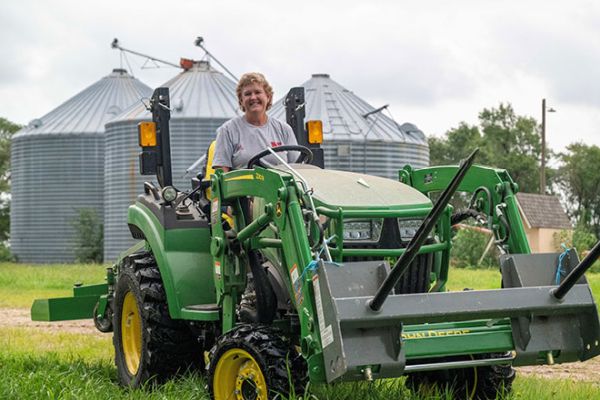
March 17, 2026 – Surprise, Nebraska – Quail Forever’s 2025/2026 Farmer of the Year Award, sponsored by John Deere, honors Teresa Otte of Surprise, Nebraska. The annual award recognizes the innovative use of precision ag technology and utilization of data to identify profitable solutions for agriculture and wildlife on working lands throughout America.
A lifelong farmer, Otte began learning the trade at just 16 years old, planting corn alongside her father in southeast Nebraska. Raised with a deep respect for the land, she built a successful irrigated row crop operation of corn and soybeans while remaining committed to conservation.
“On my dad’s side of the family, they were very conservation-minded,” Otte said. “They were all about good stewardship of the land and taking care of the soil. What being the 2026 Farmer of the Year means to me is somewhere between Wow! and I’m really, really honored.”
Otte worked closely with Quail Forever precision agriculture coordinator Nathan Pflueger to implement full-season cover crop practices on her farm. In 2024, she enrolled 80 irrigated acres into the program, followed by 40 irrigated acres in 2025, the maximum acreage allowed under program guidelines. These diverse plantings extended flowering windows and provided critical brood-rearing habitat for pheasants and quail during Nebraska’s peak summer months.
“She was one of the very few landowners willing to enroll the maximum acres into our full-season cover crop program,” Pflueger said. “Teresa had been a longtime advocate for soil health, water quality, and wildlife habitat. She was doing all that before I had the opportunity to work with her. I think this award validates what she’s done in the past.”
In addition to improving soil structure and organic matter through cover crops, Otte removed 10 acres from row crop production to address erosion concerns and restore perennial habitat. The result is a healed landscape that provides structure, winter food sources and critical insect availability for upland birds.
Otte also enrolled her property in Nebraska’s Open Fields and Waters Program, allowing walk-in public hunting access.
“With roughly 97 percent of Nebraska in private ownership, working on working lands is critical to any kind of habitat conservation effort,” said Scott Luedktke, Southeast district manager of private lands for the Nebraska Game and Parks Commission. “Teresa’s property is in a wonderful location adjacent to a wildlife management area, which adds scale.”
Throughout her life, Otte spoke often about seeing fewer pheasants and quail than in her youth, but she remained hopeful. With each perennial planting and conservation practice implemented, she found encouragement in hearing birds call across the landscape in the early morning hours.
“What I would like for succeeding generations to remember about this land is that somebody always cared enough to take care of it,” Otte said. “That’s about as simple as it gets.”
Teresa Otte passed away in the fall of 2025. Her legacy lives on in the healthy soils she restored, the wildlife habitat she established, and the example she set for farmers across Nebraska and beyond. She will be remembered as a kind soul who loved the land and the animals that live there.
Watch this video to celebrate our 2025/2026 Farmer of the Year.
About Quail Forever
Pheasants Forever and Quail Forever make up the nation’s largest nonprofit organization dedicated to upland habitat conservation. This community of more than 500,000 members, supporters and partners is dedicated to the protection of our uplands through habitat improvement, public access, education and advocacy. A network of 754 local chapters spread across North America determine how 100 percent of their locally raised funds are spent — the only national conservation organization that operates through this grassroots structure. Since its creation in 1982, the organization has dedicated more than $1 billion to 580,000 habitat projects benefiting 31 million acres.

