
$1.5 Billion in Annual Economic Output Generated From Recreational Angling That Involves Atlantic Menhaden as Bait


As the Atlantic States Marine Fisheries Commission prepares to set a new menhaden catch limit and considers whether to initiate a reallocation process among states, a new study shows that recreational anglers rely on this keystone species as one of the most important baitfish
(Washington D.C.)—Atlantic menhaden are often called the “most important fish in the sea” because of the vital role they play in supporting striped bass, bluefish, tuna, ospreys, and countless other predators. But menhaden are more than a critical forage fish – they are also one of the most important bait sources for recreational and commercial fisheries along the Atlantic.
A new study conducted by Southwick Associates provides the most comprehensive assessment to date of how recreational anglers use Atlantic menhaden and the value they place on access to this critical resource.
The study estimates that recreational Atlantic fishing trips involving menhaden generated approximately $804 million in angler spending and supported more than 7,200 jobs nationwide in 2025. But the economic effects of angler spending extended well beyond direct purchases.
“Atlantic fishing trips involving menhaden generate more than $1.5 billion in annual economic output,” said Ben Scuderi, lead economist at Southwick Associates. “That figure represents the full spectrum of spending that occurs for fishing trips where menhaden are used as bait, from direct purchases of equipment, food, fuel, and the many other items needed for a day of fishing, to the downstream effects that spending has on retailers, manufacturers, and countless other businesses.”
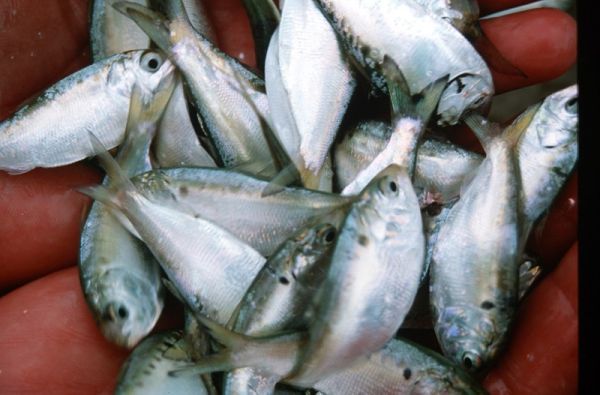
The report also estimates that recreational anglers used menhaden on 13.9 million fishing days in 2025, demonstrating the species’ widespread importance as a bait source throughout the Atlantic Coast. Those fishing days occurred across the region:
- 6.3 million fishing days in the Mid-Atlantic
- 5.1 million fishing days in the South Atlantic
- 2.5 million fishing days in New England
The study showed that menhaden bait supports fisheries targeting some of the Atlantic Coast’s most popular recreational species, including striped bass, bluefish, tuna, weakfish, flounder, red drum, and cobia. Researchers also found that anglers depend heavily on access to menhaden products beyond live or dead fish as bait, such as menhaden chum or menhaden-based scent products.
“Together, these findings paint a clear picture. Atlantic menhaden are clearly not a niche bait source used by a small segment of anglers,” said Jaclyn Lunaas, forage fish program manager for the Theodore Roosevelt Conservation Partnership. “They are a foundational component of recreational fishing across much of the East Coast.”
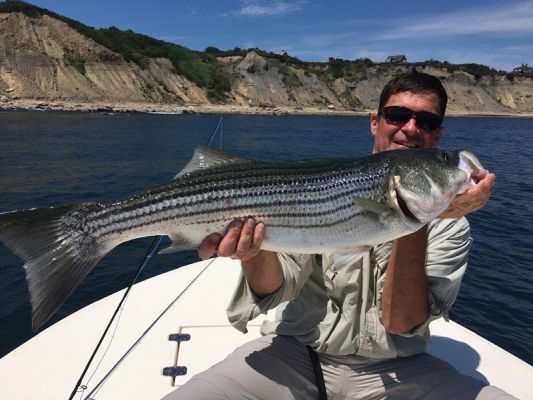
The report findings suggest that anglers view menhaden as more than just a single option for bait. The data indicate that for many fishermen, menhaden are a preferred and highly valued tool for pursuing the species they care most about.
The findings come at a pivotal moment for Atlantic menhaden management, as the Atlantic States Marine Fisheries Commission prepares to make major decisions about the future of the fishery this fall. In November, the ASMFC’s Atlantic Menhaden Management Board is expected to establish a new coastwide total allowable catch (TAC) for Atlantic menhaden for 2027-2028. The Board may also decide whether to formally initiate a process to reallocate state menhaden quotas. Current state allocations are largely based on historical harvest and have remained mostly unchanged, despite major changes in fish availability, bait supply, and public demand for the resource.
“As the ASMFC considers updating the menhaden state allocation system, properly weighing the importance of menhaden as bait in recreational and commercial fisheries is essential,” said Mike Waine, Atlantic fisheries policy director for the American Sportfishing Association. “Atlantic tackle retailers, charter businesses, and recreational anglers generate hundreds of millions of dollars through the use of menhaden as bait, but those investments have not resulted in meaningful consideration of the recreational sector’s needs.”
Virginia currently receives approximately 75% of the coastwide allocation, with most of that harvest supporting a single foreign-owned reduction fishery. In contrast to the economic benefits provided by menhaden as bait for recreational angling, according to the reduction industry, “Omega Protein and Ocean Harvesters together generate over $100 million in economic activity” from their Virginia-based operation.
Historically, Atlantic menhaden management discussions have focused on stock assessments, harvest levels, commercial landings, and ecological reference points, all critically important and central to management decisions.
“What has often been missing, however, is a coastwide understanding of how recreational anglers use menhaden and the role the species plays in supporting recreational fisheries,” said Lunaas. “This study helps fill that gap.”
Allocation decisions are ultimately about determining how access to a public resource is shared among competing user groups. To make those decisions effectively, managers require a clear understanding of the benefits the resource provides across all sectors. This new research could provide important information about recreational use that has historically been absent from allocation discussions at the ASMFC.
While the study does not prescribe a specific allocation outcome, it demonstrates that recreational anglers are a major stakeholder group whose reliance on Atlantic menhaden in different regions deserves consideration as ASMFC evaluates whether the current allocation system still reflects use of the resource.
“This study reinforces the enormous economic value that recreational fishing brings to our coastal communities, but it also highlights something that is often overlooked: the importance of menhaden as the foundation of both healthy fisheries and healthy recreational and commercial fishing businesses,” said David Sikorski, executive director of CCA Maryland and CCA Virginia. “This key information should now help shape decisions that support the broader ecosystem, the anglers and watermen who depend on it, and the coastal economies that benefit from bait to fuel fishing opportunity.”
See the full Southwick Associates menhaden study HERE
See videos advocating for reallocation of the Atlantic menhaden quota HERE
Founded in 2002, the TRCP is the largest coalition of conservation organizations in the country, uniting and amplifying the voices of sportsmen and women by convening hunting and fishing groups, conservation organizations, and outdoor businesses to a common purpose.
