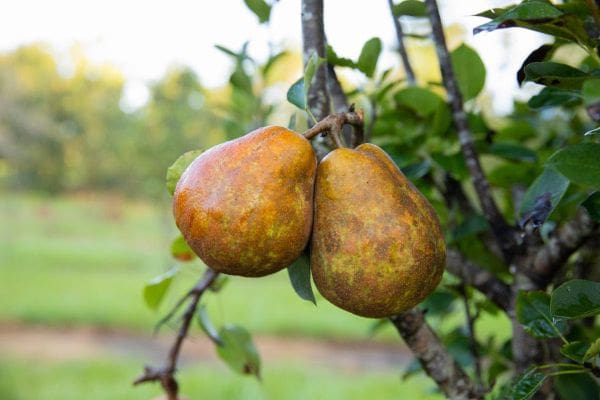
Chestnut Hill Outdoors offers several varieties of pears to help landowners meet the year-round nutritional requirements for wildlife on their land.
The key to attracting and holding more and healthier wildlife species, especially deer, on your ground is providing the right type and amount of food to meet their year-round nutritional needs. Food plots are one way, but mast orchards are becoming increasingly popular and help fill nutritional gaps left by other applications.
Soft mast is often overlooked yet can be an important alternative or supplement to other applications like food plots or hard mast orchards. That’s why Chestnut Hill Outdoors offers several varieties of pears that will cover a wide time span, particularly when herbaceous vegetation matures and dies and hard mast starts to drop.
Varieties like the Flordahome Pear provide fruit in southern Plant Hardiness Zones (8-10) as early as July and August. The Pineapple Pear reaches peak production in August and September in zones 5 – 9. Then the Spalding and Kieffer Pears take over from September through October in similar zones. Several other varieties may be more suitable to your particular soil, moisture, and climate conditions, and all are listed and described on the Chestnut Hill Outdoors website: www.chestnuthilloutdoors.com
Use the link to plug in the zip code where you will be planting.
USDA Plant Hardiness Plant Zone Map Link
http://planthardiness.ars.usda.gov/PHZMWeb/
Pollination is essential to mast production. Non-grafted varieties require multiple trees for pollination. Therefore, they and even grafted, self-pollinating varieties will be more productive the more trees you plant. By planting several types, you can widen the window of attractiveness your land holds for wildlife.
When it comes to pear orchards for attracting deer, the real star is Buck’s Harvest Pear. This variety was discovered at an old homestead along the Alapaha River in southern Georgia and northern Florida. They ripen in late fall and hold on the tree until Thanksgiving, so while we enjoy our Thanksgiving harvest, bucks enjoy a harvest too. Buck’s Harvest pears are disease resistant with a traditional pear shape. The fruit provides an excellent meal for deer and wildlife and will bring them in throughout the hunting season. The success of new trees is heavily dependent on the care received during and after planting.
Buck’s Harvest Pear Features:
- Height at Maturity: 20′-30′
- Spread: 10’-20’
- Tree Form: Modified Leader
- USDA Zone: 5-9
- Bloom: February-March
- Fruit Drop: October-December
- Soil: Adapted to upland, well-drained or sandy clay or loam. Can handle wet soil if only seasonal and well-drained.
- Soil pH: 6.0 – 7.0
- Light requirements: Full sun
- Pollination: Self-fertile, grafted. Each additional tree will increase pollination for better mast production
- Suggested Pollinators: Plant more than one for better yield
Chestnut Hill is the best place for you to purchase your food plot and deer attractant plants because they offer a large selection, their plants are specifically bred to attract deer, and they offer customers different-sized plants at different levels of growth. To ensure you receive the maximum benefit from their products, they also provide sound advice and instruction on proper planting and care. For more on Chestnut Hill Outdoors products and how to care for them, visit ChestnutHillOutdoors.com, or call (855) 386-7826.
For more information, please visit
WWW.CHESTNUTHILLOUTDOORS.COM